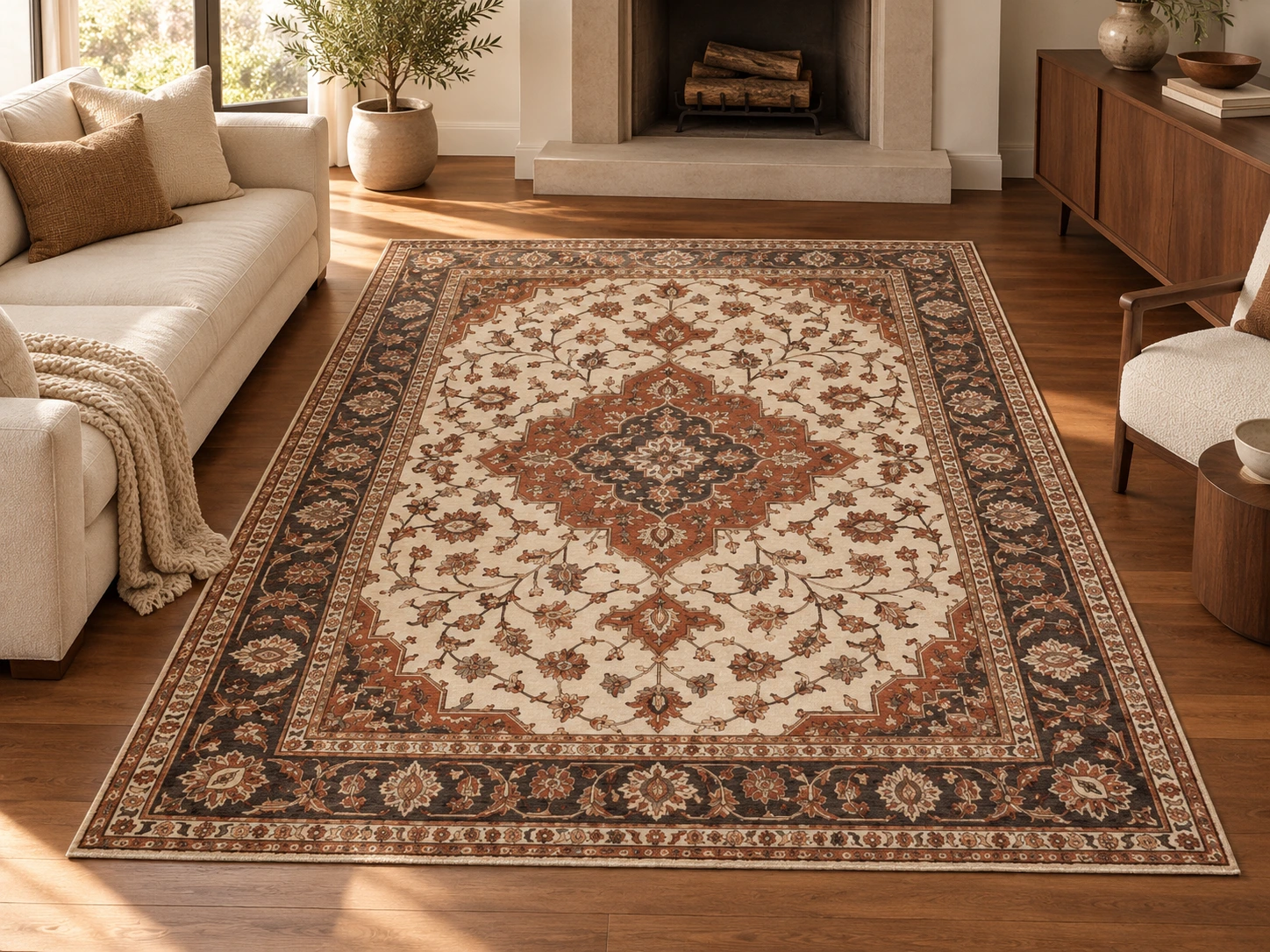
A hand-knotted rug is built one knot at a time. An artisan ties short lengths of yarn around the vertical warp threads of a loom, row by row, packing each row down with a comb before starting the next. There is no backing material — the knots themselves are the structure of the rug.
How to identify one
Flip the rug over. A hand-knotted rug shows the same pattern on the back as the front, with visible individual knots and no separate backing layer. The fringe at each end is usually the extension of the warp threads themselves, not sewn on afterward.
Why it matters to a buyer
Hand-knotted is the most labor-intensive and most expensive construction, with lead times measured in weeks to months depending on size and knot density. In exchange, it is also the most durable: because the pile is woven into the structure rather than glued or stitched to a backing, a well-made hand-knotted rug can last for generations and be repaired knot by knot. It is the natural choice for heirloom, premium, or investment-piece positioning.