Skip to content
Made to order · Shipped worldwide
Handmade Rug

Rug Guide

How a Handmade Rug Is Made

Four ways to make a rug by hand, what each feels like, and how to choose between them.

Heirloom

Hand Knotted

Heirloom, long-lasting, finest detail
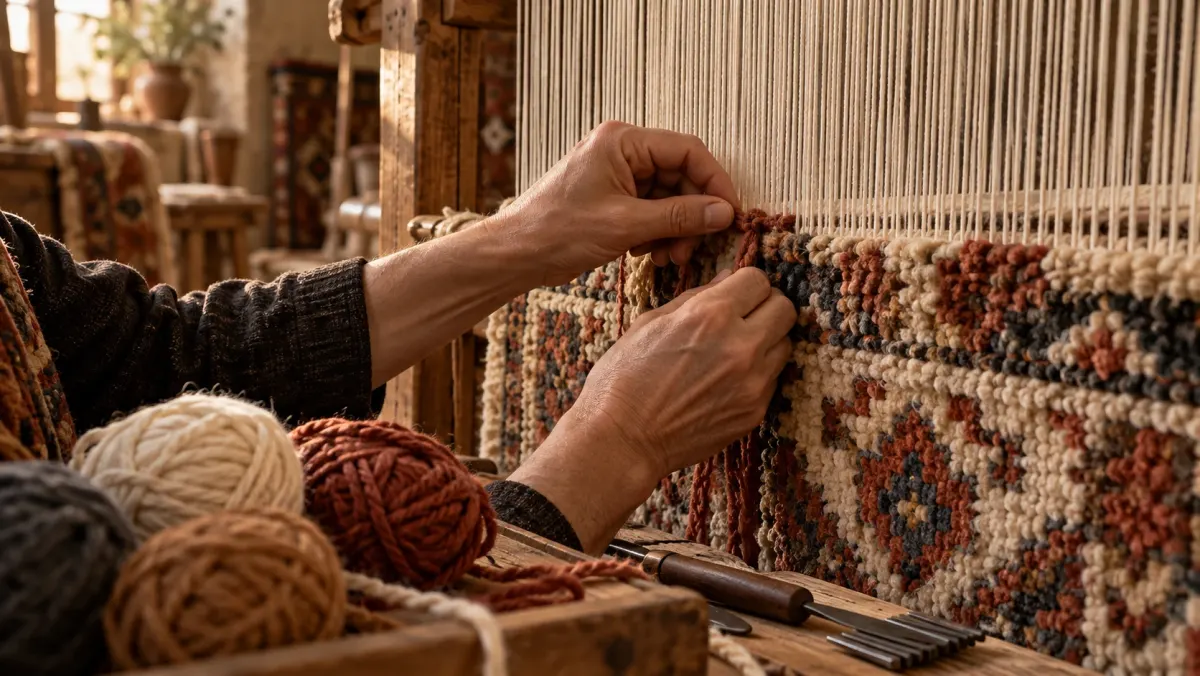
Hands knotting a rug on a traditional loom

Every knot is tied by hand around the warp threads on a loom, so the pattern and the structure of the rug are one and the same. It is the slowest method, and the most durable. A well-made piece can last for generations and can be repaired knot by knot.

  • Weeks to months per rug, depending on size and knot density
  • Pile is woven in, with no glued backing
  • Best for living rooms, dining rooms and rooms where the rug is the centrepiece

Soft and modern

Hand Tufted

Soft, sculptural, contemporary

A hand-held tufting gun punches yarn through a stretched cloth backing following a drawn design. The pile is then sheared or carved, and a second backing is applied. It is quicker than knotting, which makes bolder, larger designs and sculpted pile practical.

  • Faster to make, so more design freedom and sizes
  • Plush underfoot; pile can be carved into relief patterns
  • Best for bedrooms, lounges and contemporary interiors

Natural and textured

Hand Loom

Natural, easy-living

Yarns are woven on a loom without knotting, producing a dense, textured surface. Natural fibres such as jute, cotton and wool are common.

  • A relaxed, organic texture
  • Works well in busy family rooms
  • Often a lighter, more affordable option

Light and versatile

Flat Weave

Light, reversible, practical

Warp and weft are interlaced into a thin, reversible rug with no pile, as in a dhurrie or kilim. Patterns are woven in rather than cut.

  • Thin, light and easy to move or clean
  • Often reversible
  • Good for dining areas, hallways and layering

Not sure which suits your room?

Answer three quick questions, or talk to a designer.