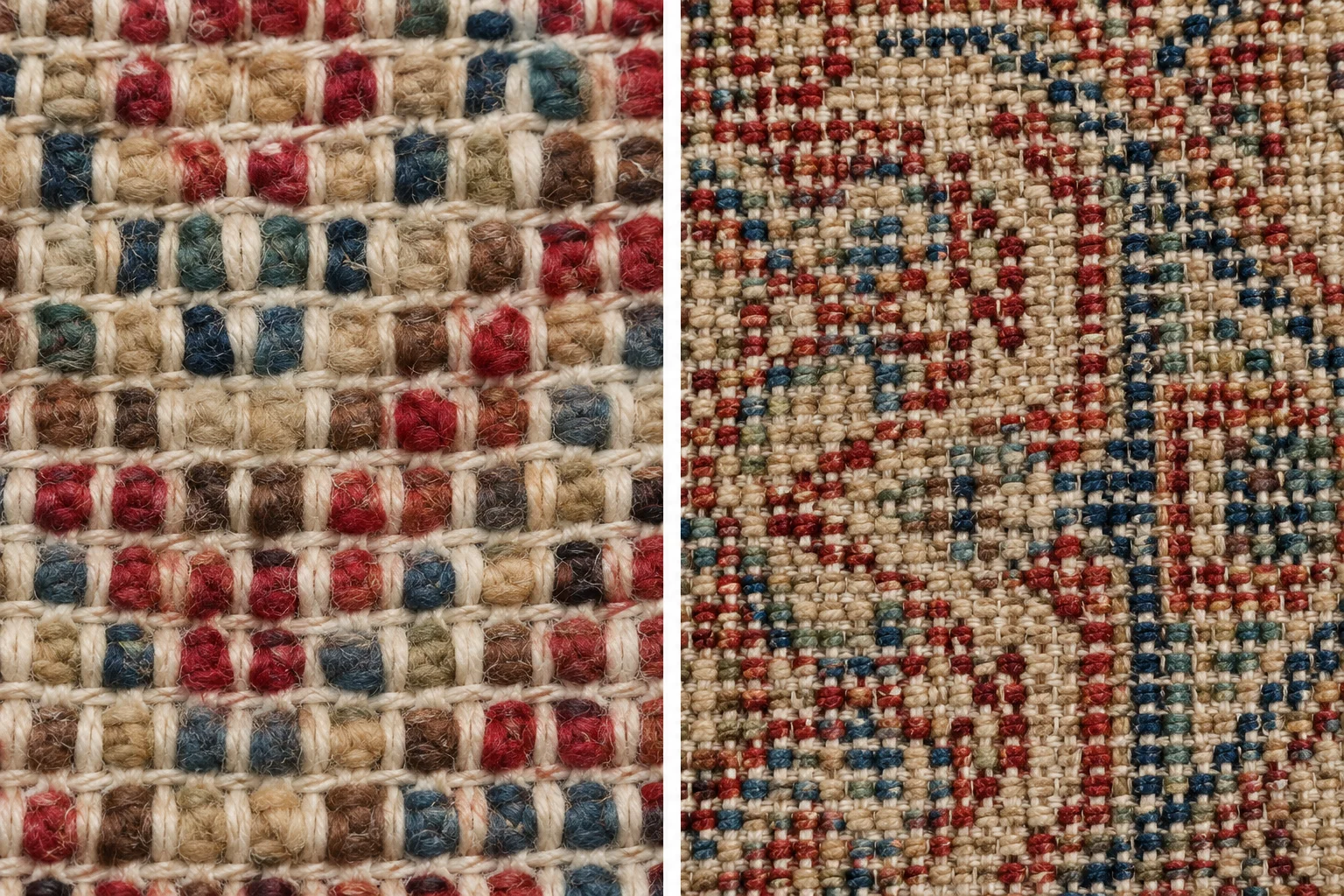
Knot density, usually expressed as knots per square inch (KPSI), measures how many individual knots are tied in a given area of a hand-knotted rug. It is the main variable that determines how fine the pattern detail can be — a higher KPSI allows curved lines, shading, and small motifs that a coarser weave cannot resolve.
Why it matters to a buyer
Knot density is directly tied to production time and cost: a denser rug takes longer to weave and costs more per square foot, but also tends to be more durable, since more knots per square inch means a tighter, more resilient pile. Commercial hand-knotted rugs commonly range from roughly 40 to over 150 KPSI; the right density for a given program depends on budget, the intricacy of the design, and target price point, and is something to confirm with your manufacturer per order.