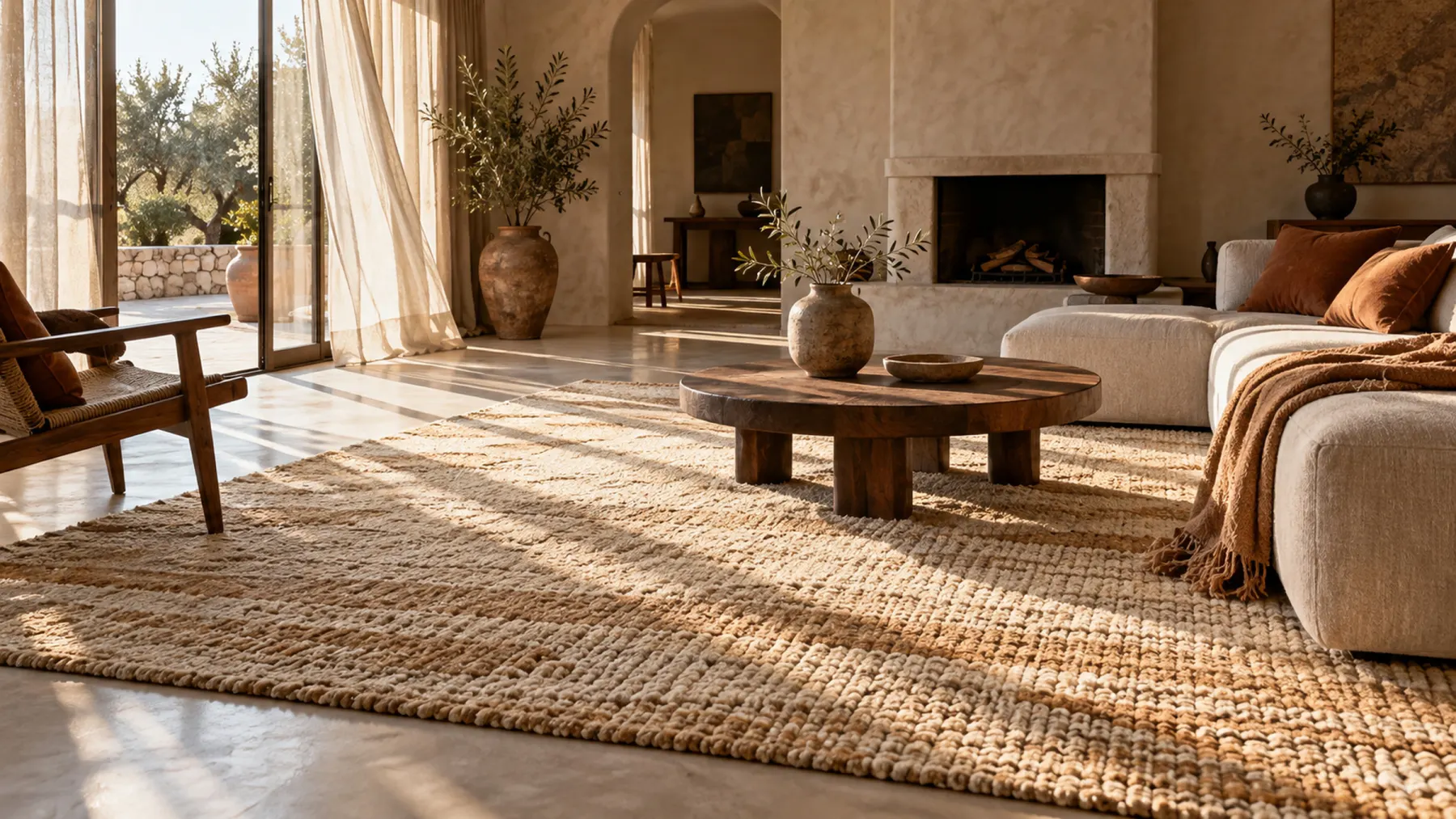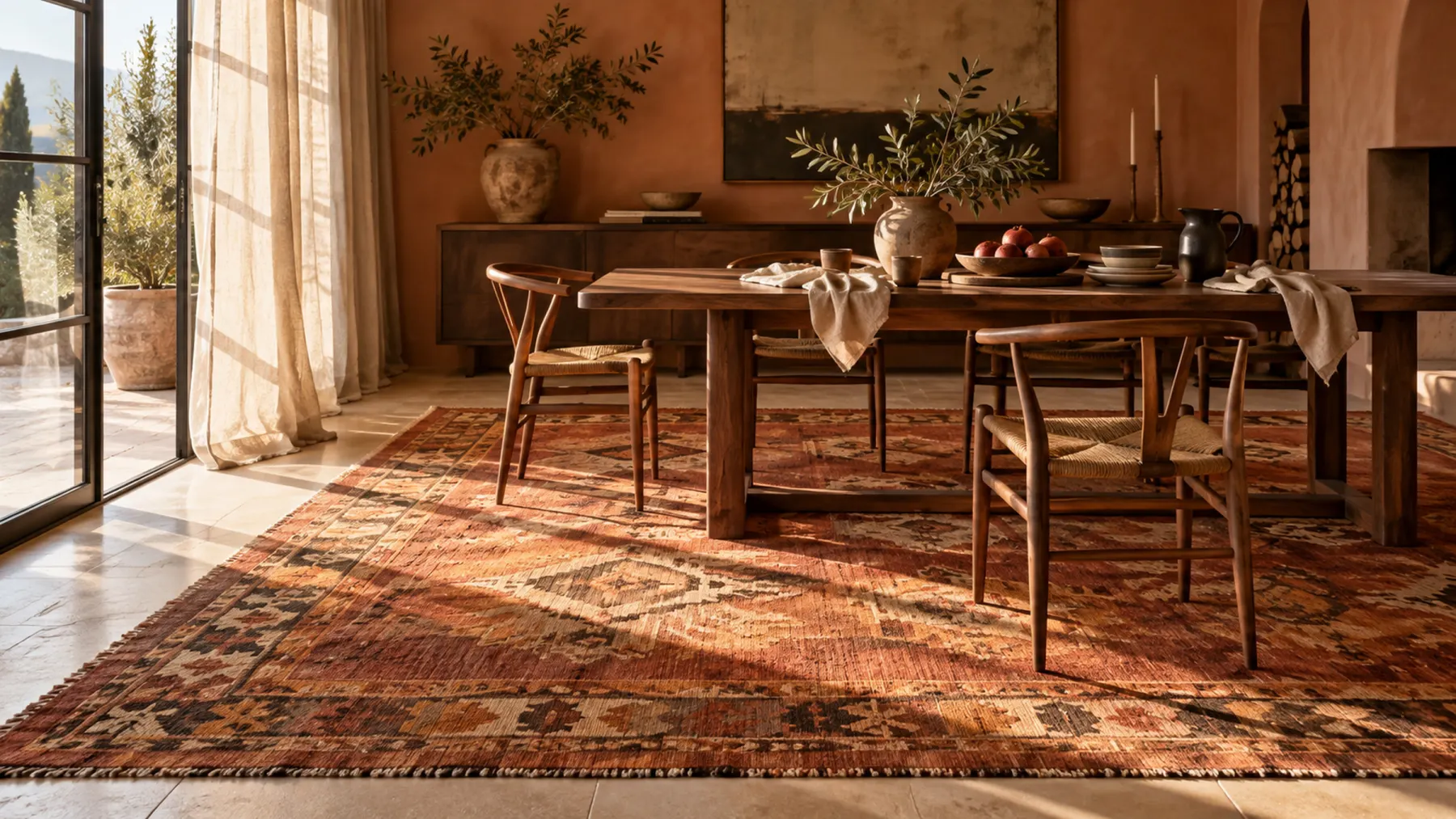
"Handmade" covers a wider range than most buyers realize. A hand-knotted rug and a hand-tufted rug can look almost identical in a product photo, but they're built differently, age differently, and sit at very different price points. If you're sourcing for a retail line, knowing which is which — and why it matters — changes what you should be asking a supplier.
Construction: Knots vs. a Tufting Gun
A hand-knotted rug is built one knot at a time on a loom, with vertical warp threads and horizontal weft threads woven through by hand. Depending on size and knot density, a single rug can take weeks to months to complete. There's no backing material — the knots themselves are the structure of the rug.
A hand-tufted rug is made by punching yarn through a fabric backing using a handheld tufting gun, following a pre-drawn pattern. The loops are then sheared to create pile, and a secondary backing (usually cotton or latex-coated fabric) is glued or stitched on to hold the yarn in place. It's still a hand process — a skilled operator guides the gun — but it's mechanically assisted in a way hand-knotting isn't.
Durability and Lifespan
Hand-knotted rugs are the more durable of the two. Because the pile is woven into the structure rather than glued to a backing, a well-made hand-knotted rug can last decades, even generations, with proper care. Hand-tufted rugs are more vulnerable to the backing separating or cracking over time, especially with heavy foot traffic or improper cleaning — expect a shorter functional lifespan, typically in the range of 5-10 years depending on use.
Price and Lead Time
The labor difference shows up directly in cost. Hand-knotted rugs are significantly more expensive to produce and take much longer to manufacture. Hand-tufted rugs are faster to produce and more affordable, which is why they dominate mid-market and trend-driven collections where designs change seasonally and price points need to stay accessible.
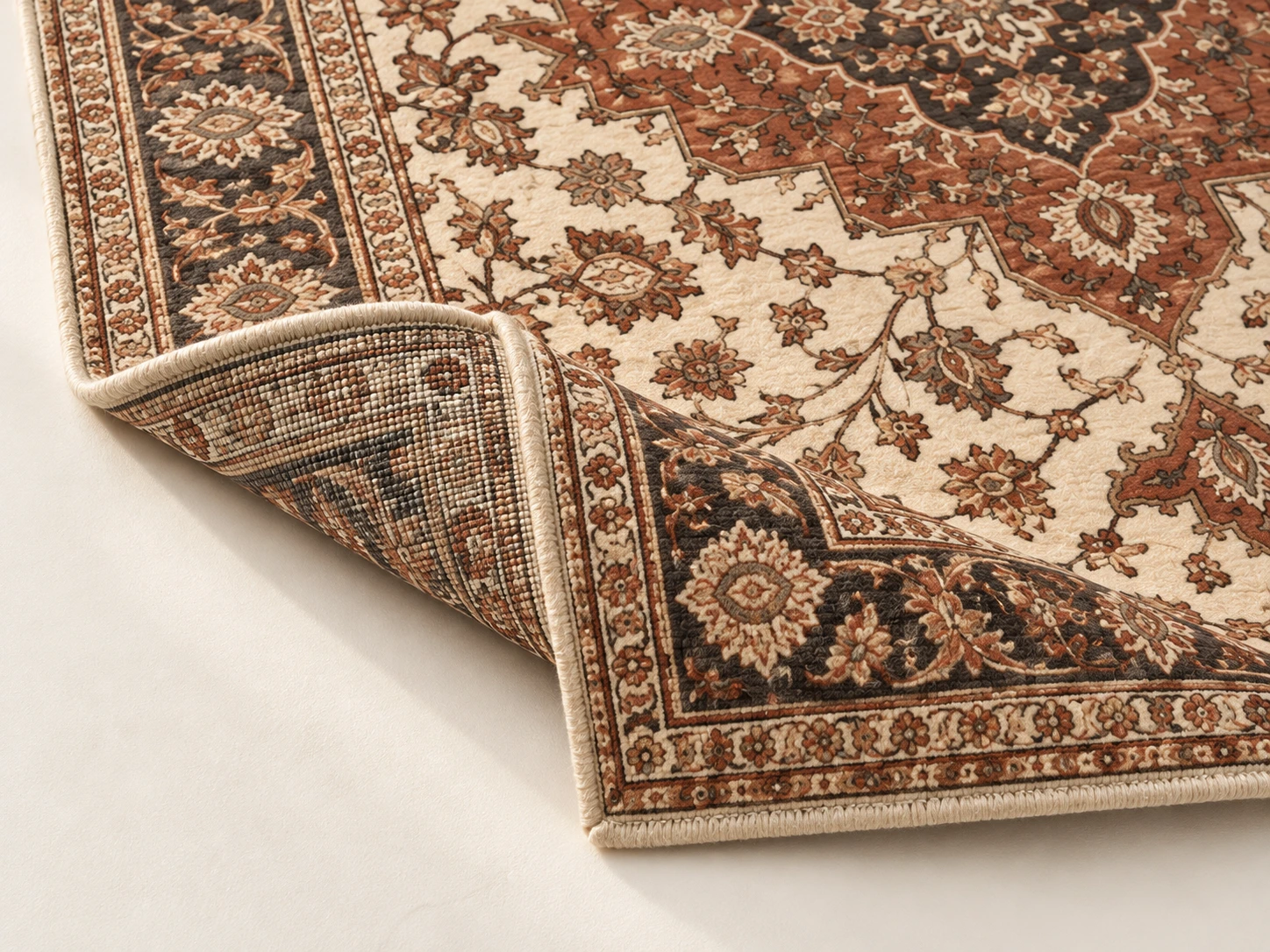
How to Tell Them Apart by Looking at the Back
The quickest way to identify construction is to flip the rug over. A hand-knotted rug shows the same pattern on the back as the front, with visible knots and no separate backing layer. A hand-tufted rug has a fabric backing on the reverse (often canvas-colored or white), which completely hides the knot structure — you'll see the backing material, not yarn.
Which One Should You Buy?
Neither is "better" in the abstract — it depends on the positioning. Hand-knotted makes sense for heirloom, premium, or investment-piece positioning where durability and craft story justify the price. Hand-tufted makes sense where you need faster turnaround, lower price points, or more frequent design changes without sacrificing a genuinely handmade finish.