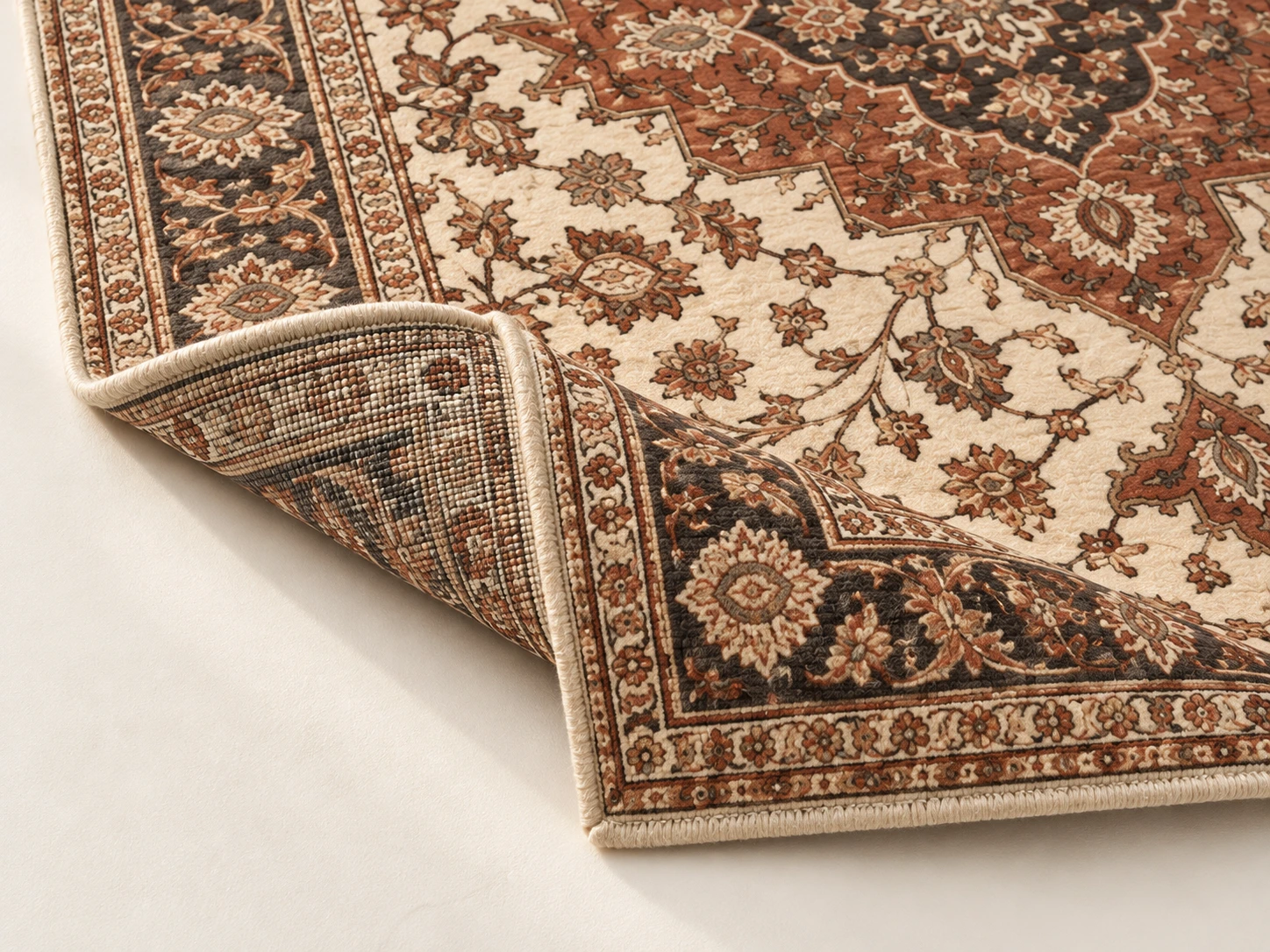
Handmade rugs are built to last far longer than machine-made alternatives, but that lifespan depends on basic care. None of this is complicated — it's mostly about avoiding a handful of common mistakes.
Vacuum the Right Way
Vacuum regularly, but turn off the beater bar/rotating brush on pile rugs — it can pull at hand-knotted or hand-tufted yarn over time. A suction-only setting or a vacuum designed for area rugs is safer. For flatweaves like dhurries and kilims, a beater bar is less risky since there's no pile to catch, but suction-only is still the safer default.
Spot-Clean Spills Immediately
Blot, don't rub — rubbing pushes the spill deeper into the pile and can spread it. Use a clean cloth and plain water first; if that's not enough, a mild, pH-neutral detergent diluted in water works for most spills. Test any cleaning solution on a hidden corner first, especially on rugs with natural dyes, which can be more sensitive to chemicals than synthetic ones.
Rotate It Every Few Months
Foot traffic and sunlight exposure are rarely even across a room. Rotating the rug 180 degrees every three to six months evens out wear and fading, so the rug ages uniformly instead of showing a worn path or a sun-faded section.
Professional Cleaning
A deep professional cleaning every 1-3 years (more often in high-traffic households or with pets) removes embedded dirt that regular vacuuming can't reach. Look for a cleaner experienced specifically with handmade rugs — the cleaning method for a hand-knotted wool rug is different from what's safe for a jute or dhurrie, and the wrong method can cause shrinking, color bleeding, or backing damage on hand-tufted pieces.
What Not to Do
- Don't steam-clean or soak a hand-tufted rug — excess moisture can weaken the backing adhesive.
- Don't place a rug in direct, unfiltered sunlight for extended periods without rotation — natural dyes fade.
- Don't use harsh chemical cleaners or bleach on wool or natural fiber rugs.
- Don't let spills sit — the longer a stain sets, the harder it is to remove.